What Is A Sensory Bin?
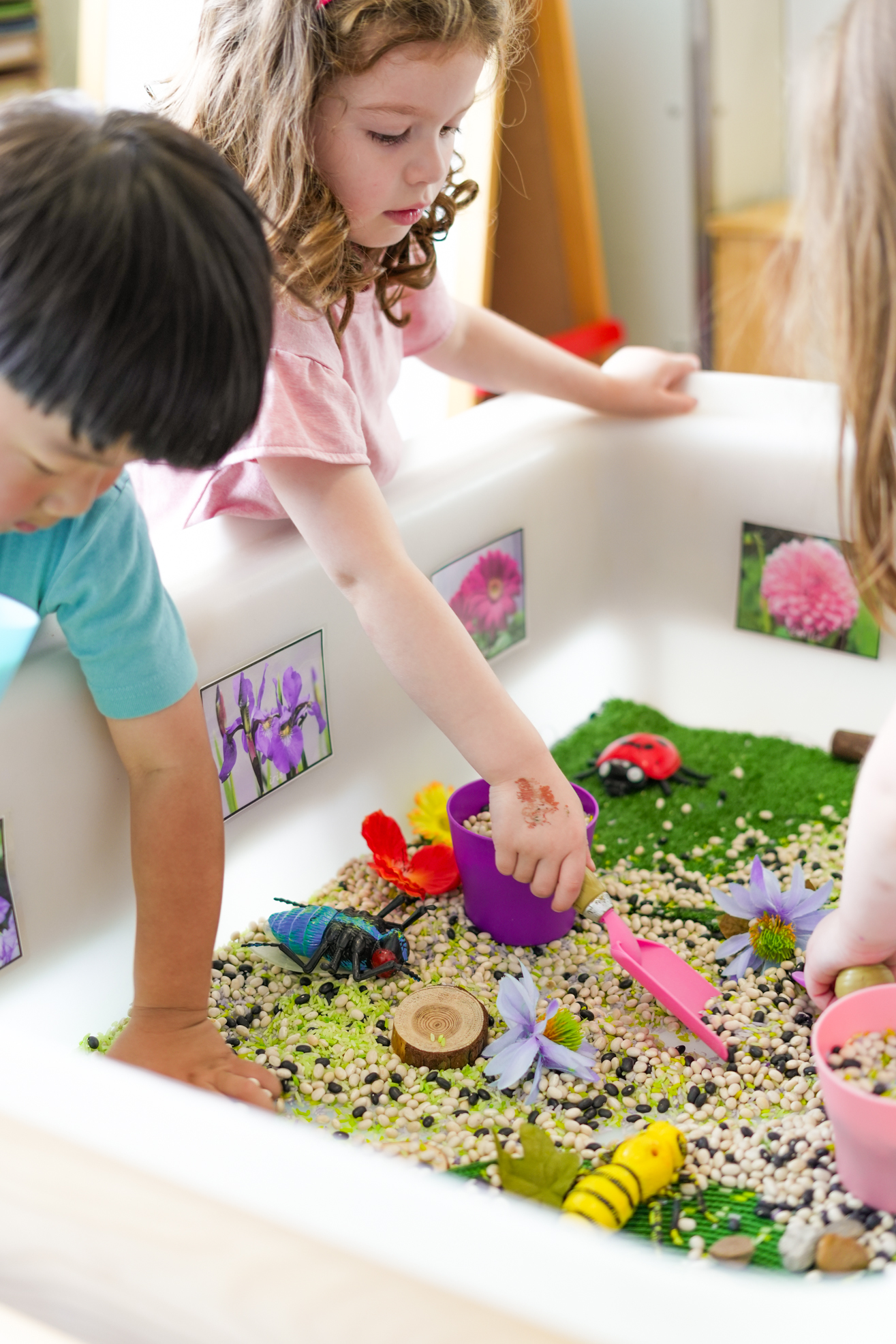
Discover the joy of exploration and creativity with sensory bins, designed to ignite your child’s imagination through tactile experiences. This activity can feature a variety of materials like soft sand, colourful rice, or shimmering water, encouraging hands-on interaction with diverse textures. As children sift, pour, and mold, they develop vital fine motor skills and hand-eye coordination while fostering their natural curiosity in a safe environment where every playtime is an adventure filled with endless possibilities.
What's the Purpose?
There are plenty of benefits for children engaging with sensory bins. This fun activity offers multi-sensory experience and hands on learning through play.
Benefits
- Strengths fine motor skills
- Boosts imagination and creativity
- Increases relaxation and calmness
- Sensory exploration
- Encourages curiosisty
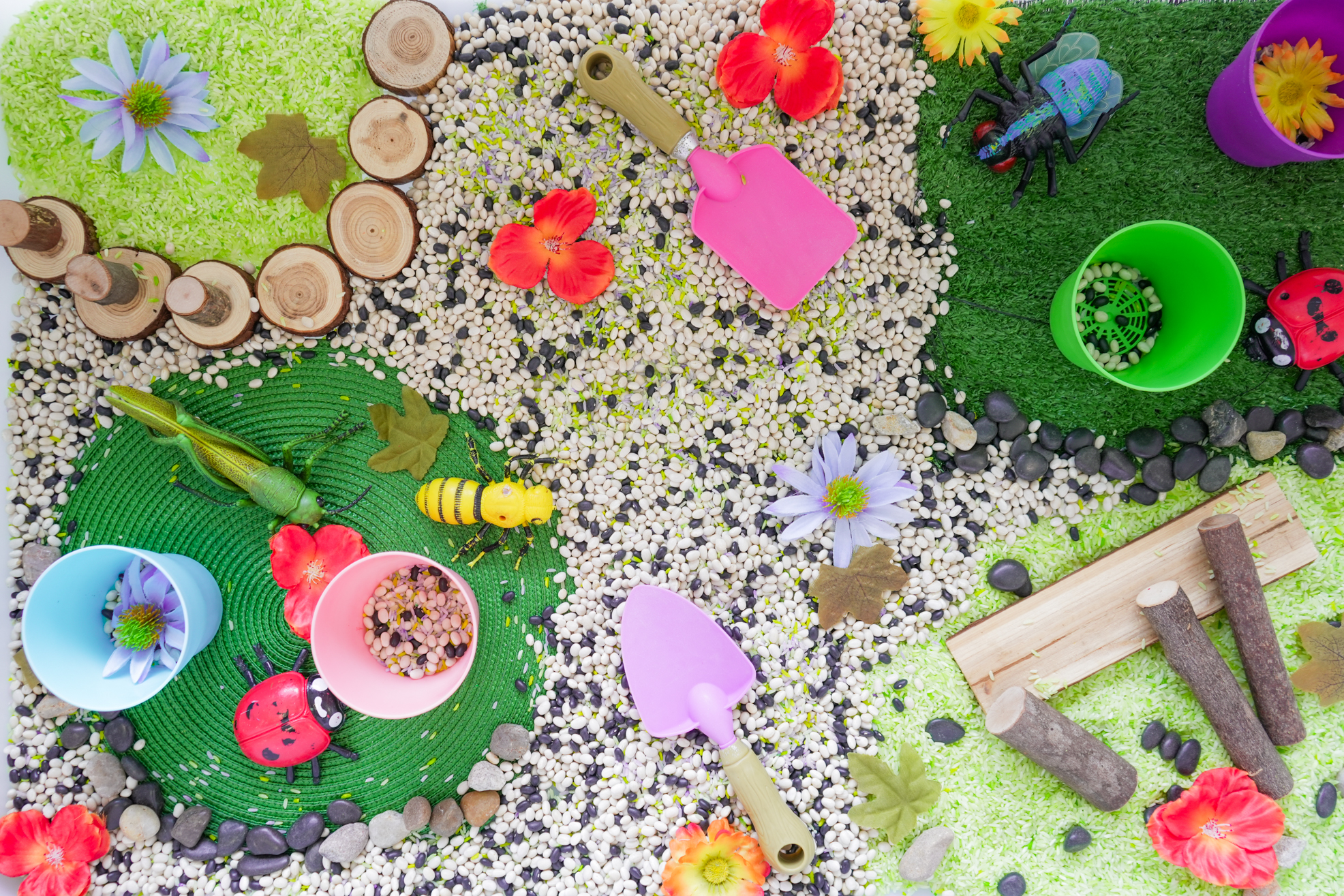
DIY Sensory Bin
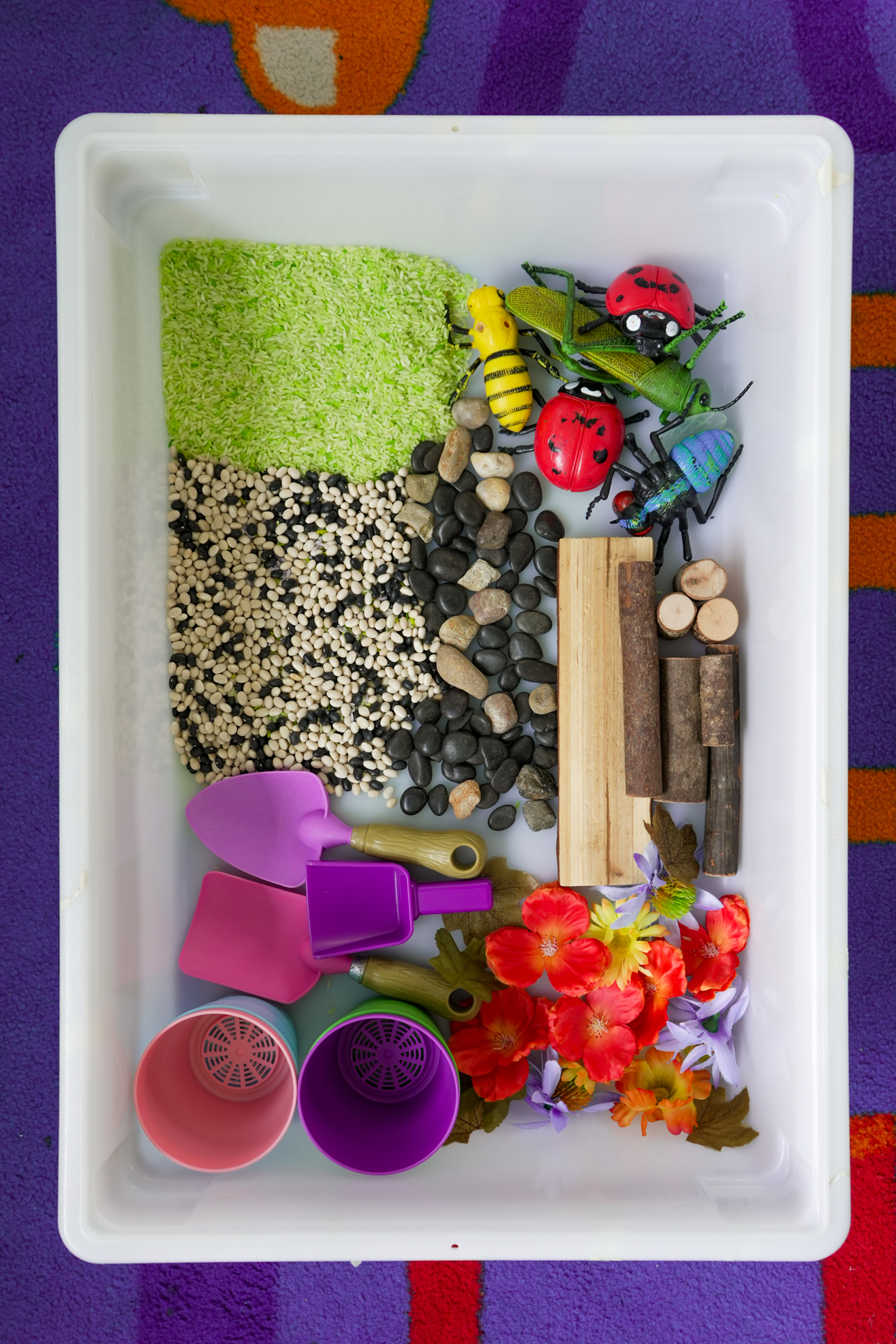
Materials (and alternatives)
- A shallow bin
- Small stones, beans, dry quinoa, green dyed dry rice, or soil
- Mini wooden logs, sticks, or twigs
- (Faux) flowers, leaves, or herbs
- Mini garden tools: showels, cups, rakes
- plastic bugs, toy veggies, or seeds
Tip:
Materials can be found right at home. Feel free to swap any items from our list with home found alternatives.
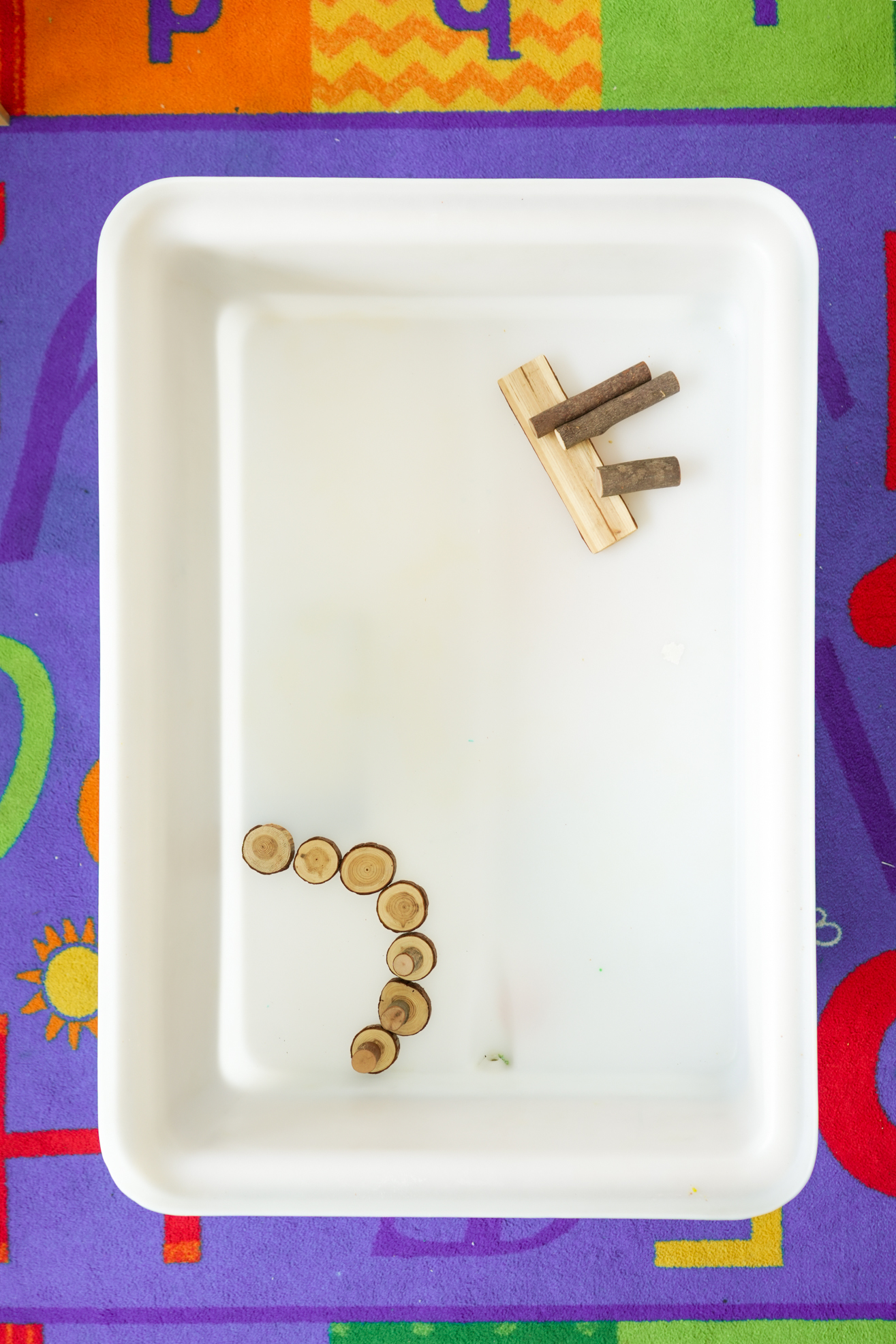
1. The Base
Using wooden piece, build your landscape. Stack, create patterns and boarders.
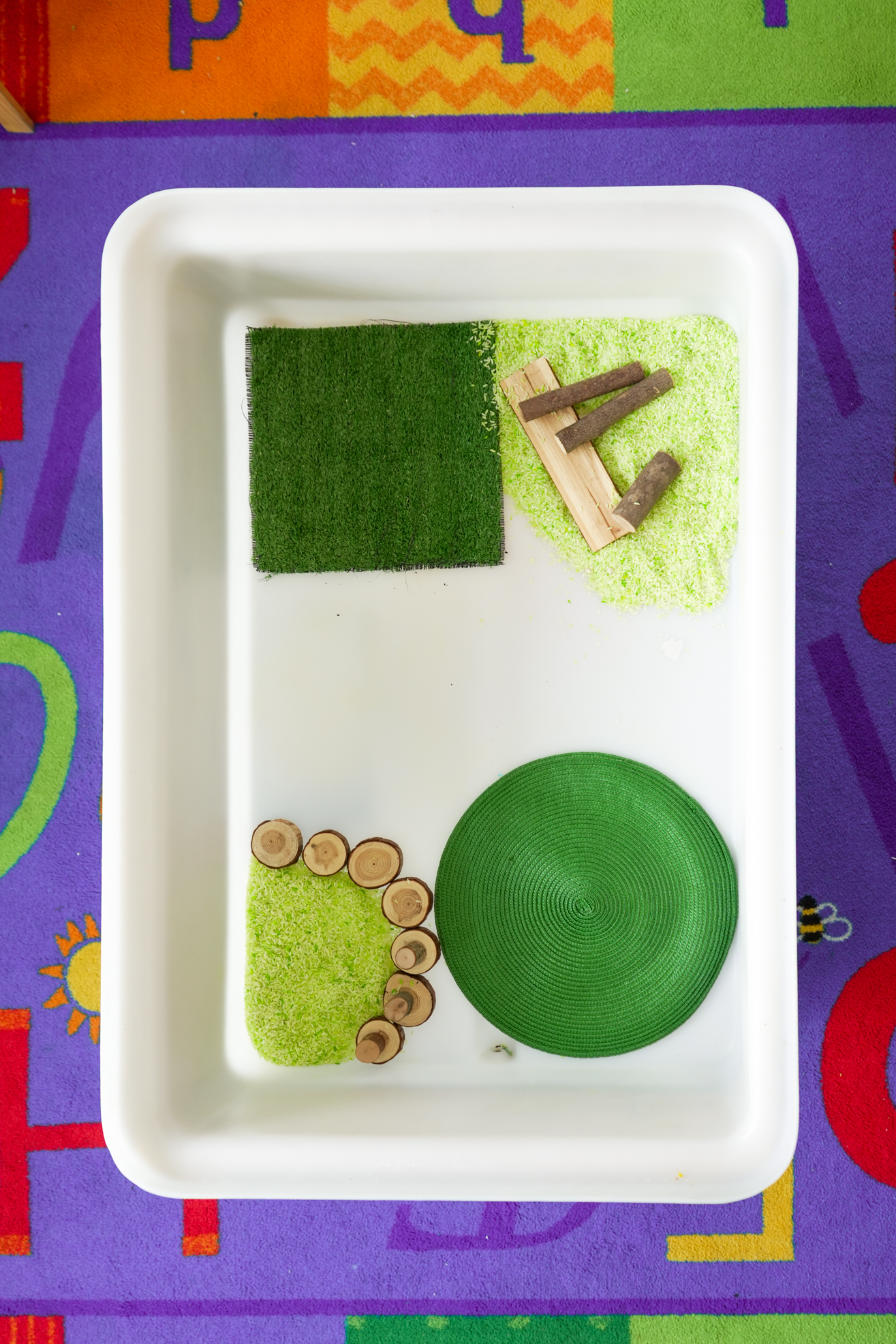
2. The Grass
Add the greenery of your garden around the base.
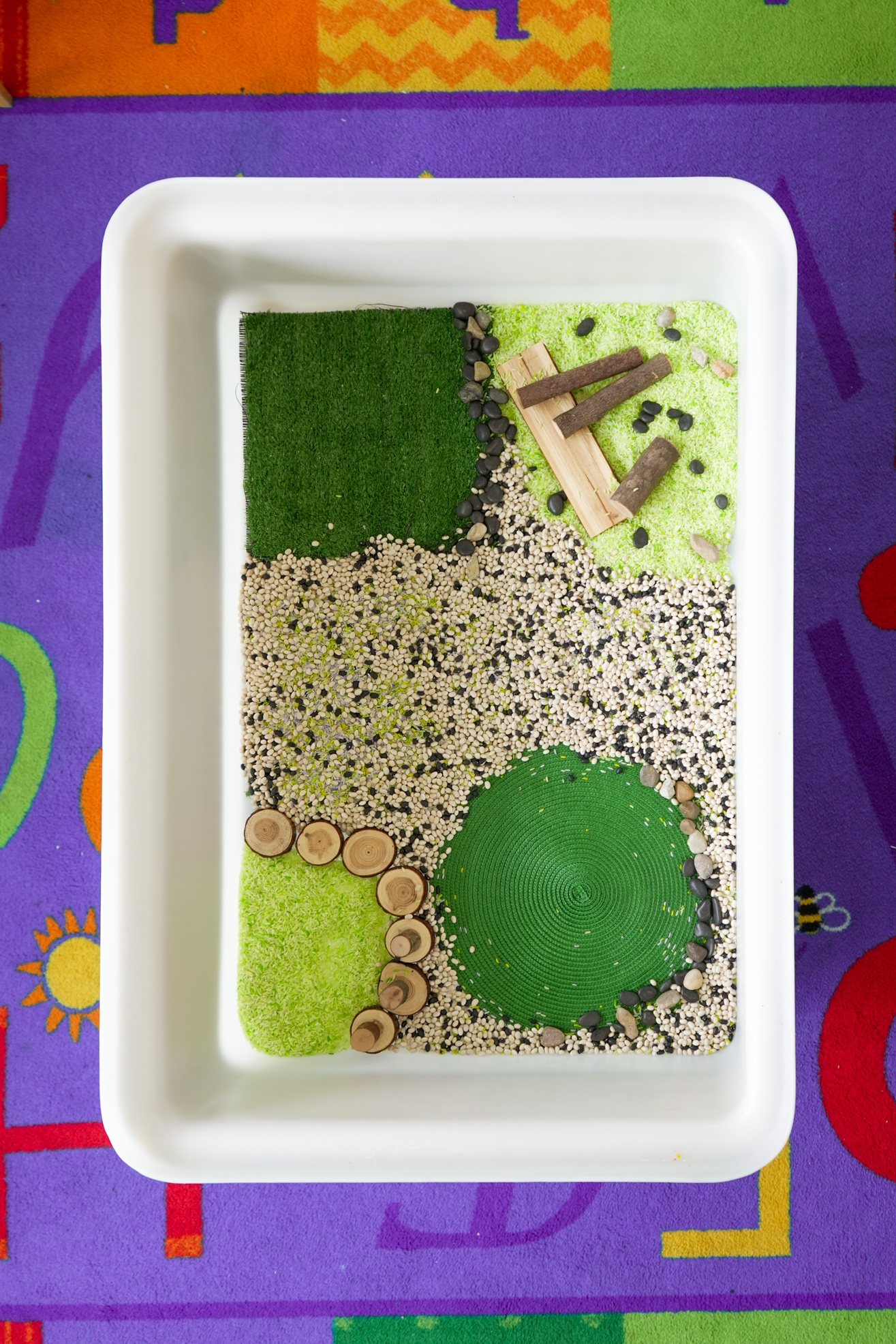
3. The Filler
Fill the remaining space with the “ground” using small grains and rocks.
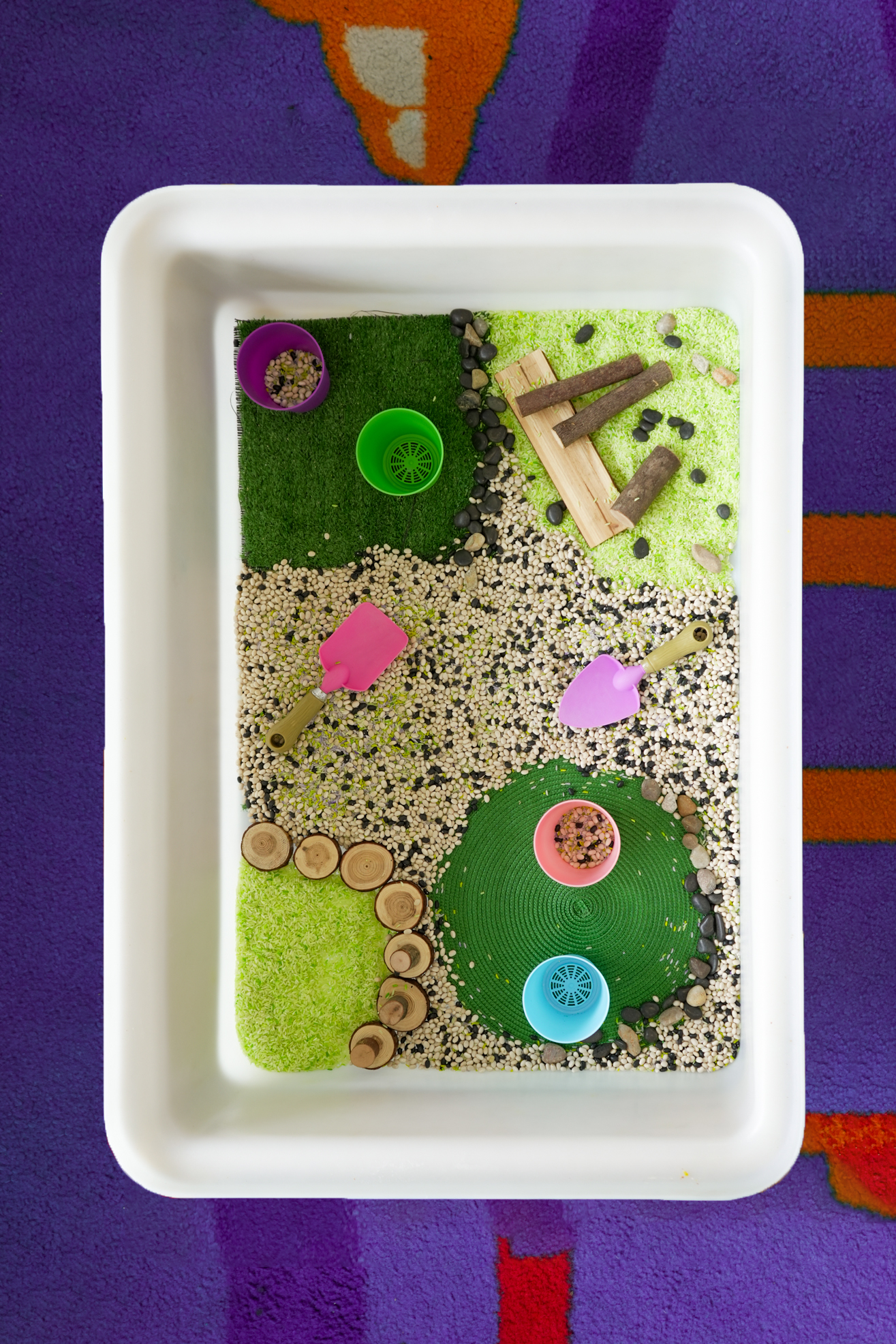
4. The Tools
Scatter the play tools around the bin. Aim to have at least 2 varieties of tools.
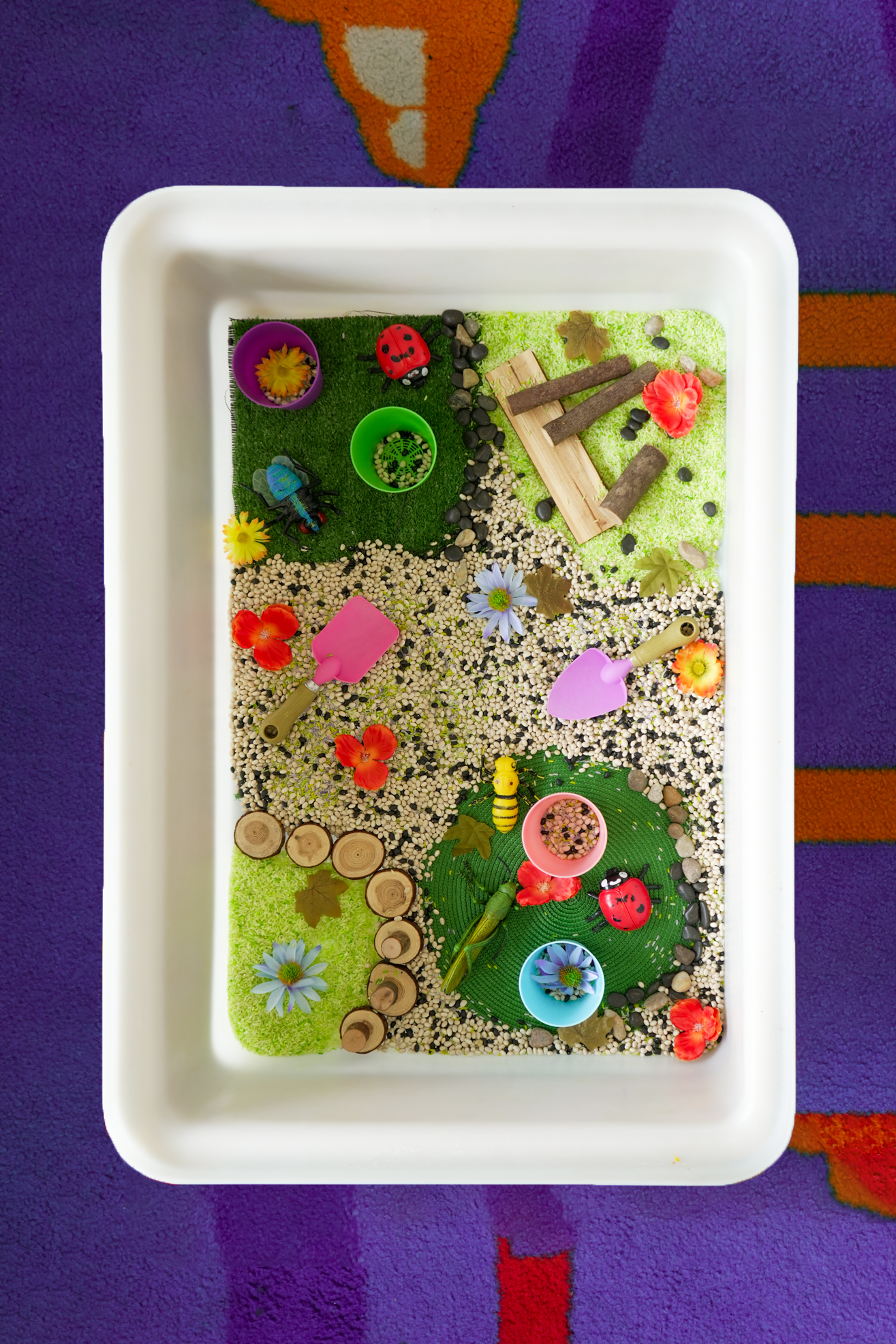
5. The Decoration
Bring the garden to life with some critters and flowers.
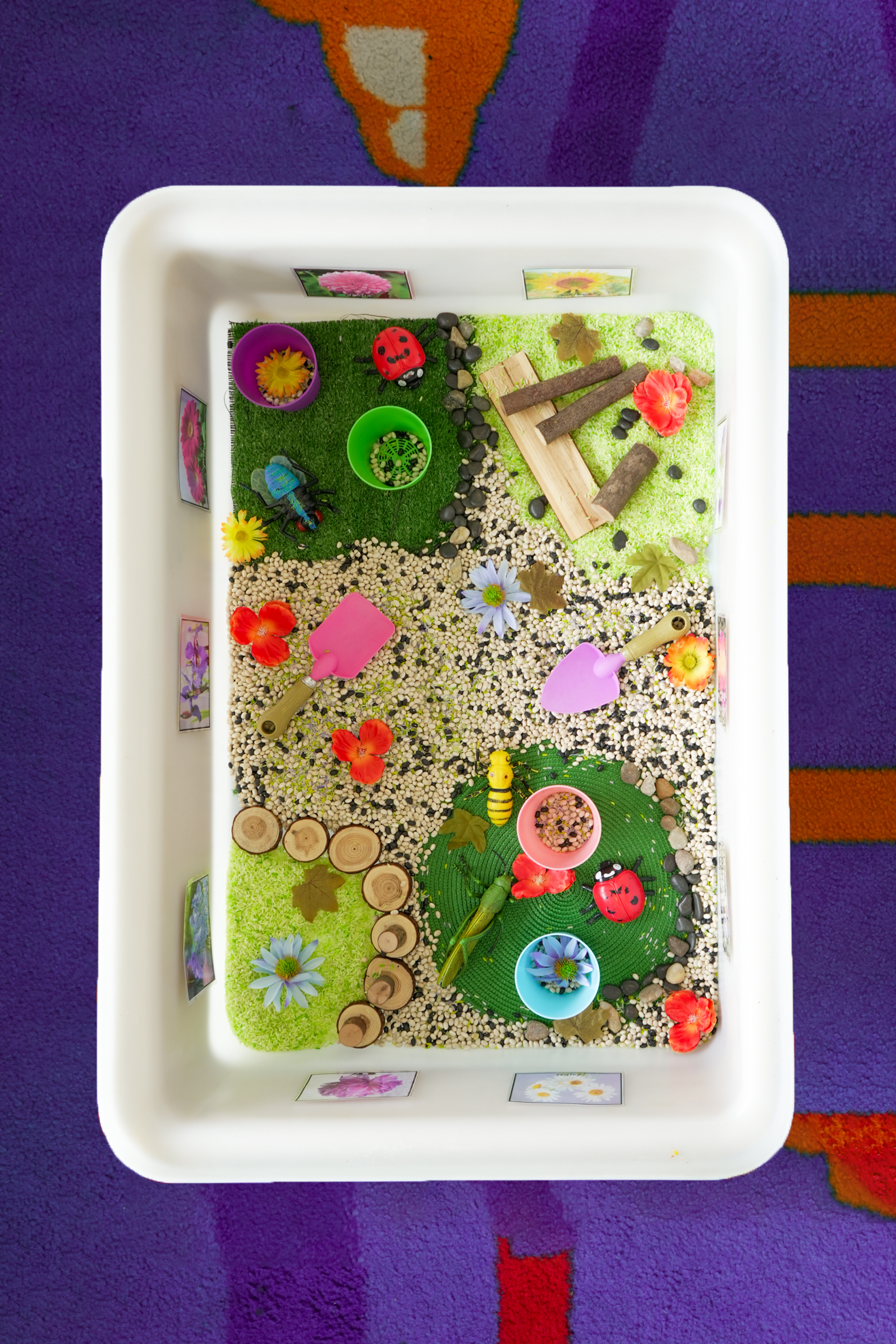
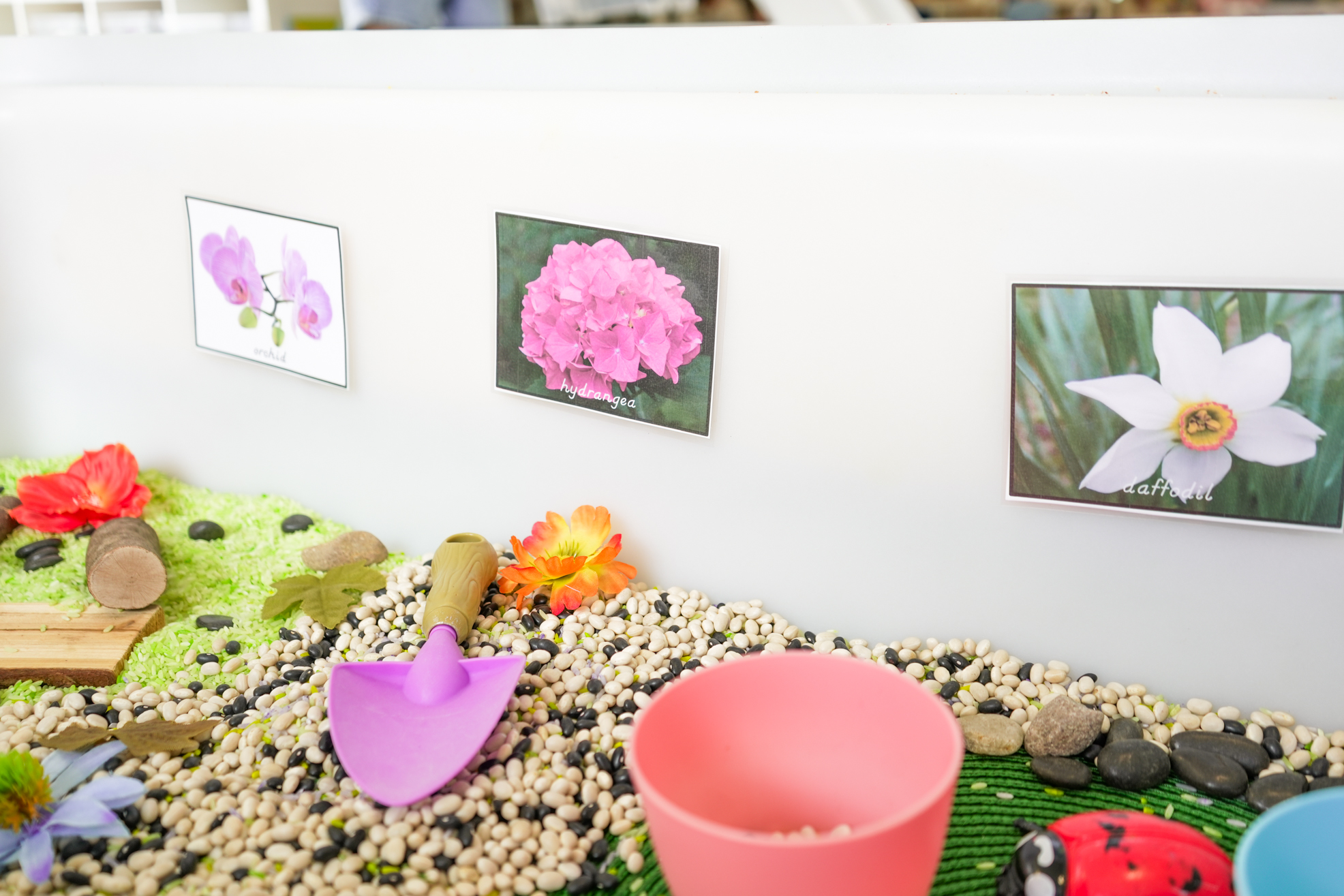
6. Educational Decor (optional)
Add vocab words to enhance learning.
Tip
You can easily adapt this for toddlers by using taste-safe fillers like oats or cereal
As Seen Online
Save this DIY for whenever you need it. Follow us on instagram for more convenient tips and tricks for early developments.
Share Your Garden Sensory Bin!
Tag us on instagram